一、为什么54V开始碰到物理极限
电功率等于电压乘以电流。机架功率持续上升,而电压仍停留在54V时,就只能通过更大的电流输送能量。结果是更粗的铜排、更大的连接器、更多热量,以及更多被电源设备占据的机架空间。
NVIDIA给出的工程估算是:当单机架达到1MW时,54V方案可能需要约200公斤铜排;如果沿用现有电源架设计,电源设备本身可能占满大部分机架空间。这里的数据来自架构推动方,应视为厂商工程估算,而不是独立审计结果。
AC
AC
54V DC
CORE
AC
800V DC
50V / 12V / 6V
CORE
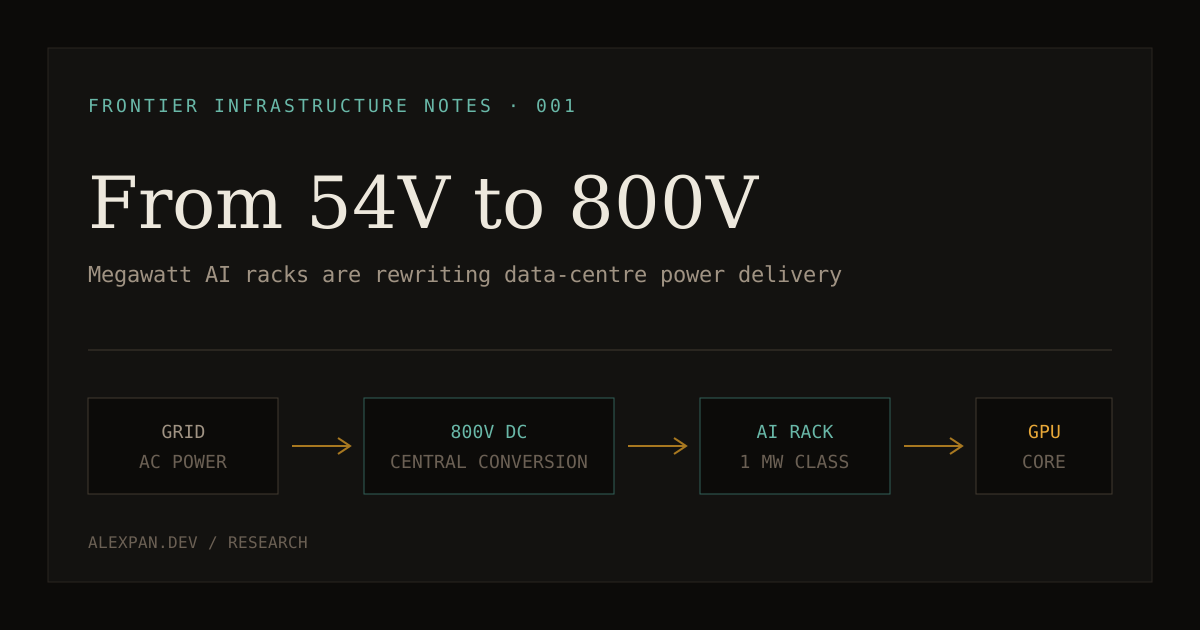
800V方案把交流转直流的位置向上游移动,再用高压直流送到机架附近。更高电压意味着同等功率下更低电流,从而减少铜和布线体积,并释放机架空间。NVIDIA计划从2027年起用这一架构支持1MW级机架;Schneider Electric则认为,近期更现实的路径是先使用邻近计算机架的独立“电源机架”,而不是马上重建整个数据中心。
二、真正值得观察的不是标准宣布,而是价值链迁移
宣布合作只能证明行业正在协调,不能证明收入已经产生。投资上更重要的问题是:哪个环节从可选项变成必需品,谁能通过客户认证,谁能稳定量产。
1. 从电网到800V母线
Eaton、Schneider Electric、Vertiv和ABB等系统厂商负责把新架构变成可以设计、施工和维护的基础设施。Eaton已经发布包含超级电容、母线、直流连接器和备用电源的参考设计。它们的优势不只是单一器件,而是认证、服务网络和系统责任能力。
2. 从800V到芯片核心
Infineon正在覆盖800V到50V、12V乃至6V的转换,并把Si、SiC和GaN用于不同功率级。值得观察的并不是“参与NVIDIA生态”这一标题,而是相关产品何时进入MGX系统、数据中心业务收入是否单独可见。
3. 新材料功率半导体
Navitas代表更高风险的小型参与者。公司已经展示800V到50V的10kW GaN平台并开始客户送样,但2025年第四季度收入只有730万美元,经营仍亏损。它更像“技术与市场同时需要兑现”的观察标的,而不是已经验证的受益者。
4. 固态变压器与一体化备用电源
私人公司Heron Power提出把34.5kV交流直接转换为800V直流,并将短时备用电源整合进去。这个方向可能减少低压变压器、UPS和配电层级,但目前最关键的证据不是标称98.5%效率,而是实际数据中心试点、可靠性和批量交付能力。
三、首批观察名单
| 公司 | 所处环节 | 已确认信号 | 下一项证据 |
|---|---|---|---|
| Eaton NYSE: ETN | 供配电系统 | 发布800V参考架构 | 订单、项目部署与数据中心积压 |
| Infineon FSE: IFX | Si / SiC / GaN转换与保护 | 2026年加入MGX生态 | 量产设计导入与收入贡献 |
| Navitas Nasdaq: NVTS | GaN / SiC器件 | 平台展示并进入送样阶段 | 客户认证、设计胜出和现金消耗 |
| Heron Power Private | 固态变压器与SuperBBU | 发布34.5kV AC至800V DC方案 | 真实客户、现场运行和制造能力 |
这是一张研究观察名单,不是证券推荐。公司被列入只表示其处于相关价值链,不代表能够获得订单或形成超额回报。
四、什么情况会证明这个判断错了
- 机架密度没有按路线图上升:模型效率、分布式计算或客户经济性使1MW机架需求推迟。
- 运营商选择其他路径:继续使用交流供电、±400V方案,或把高密度限制在少数专用设施。
- 标准长期分裂:连接器、接地、保护和备用电源标准不统一,拖慢认证和采购。
- 效率收益被复杂性抵消:高压直流维护、安全培训和故障隔离增加成本。
- 供应商只有合作公告:样品无法转为量产,或系统厂商把价值重新内部化。
五、2027年前应跟踪的里程碑
- NVIDIA Kyber及Rubin Ultra相关系统是否按路线采用800V输入。
- OCP及行业联盟是否形成连接器、保护、接地和备用电源的可执行规范。
- 系统厂商是否披露真实客户部署,而不只是实验室展示或参考设计。
- Navitas等器件供应商是否从送样进入设计胜出、量产和可见收入。
- Heron等新架构公司是否获得数据中心试点,并公布运行可靠性证据。
方向本身的置信度为中高:传统低压架构确实面临功率密度限制,产业链也在形成。采用速度和最终赢家的置信度明显更低,因此现阶段应把800V视为需要持续验证的基础设施迁移,而不是已经完成的投资结论。
来源与证据等级
- T1IEA — Energy and AI, Executive Summary独立公共机构;用于全球用电需求和项目延迟风险。
- T2NVIDIA — 800 VDC Architecture Will Power the Next Generation of AI Factories架构推动方;用于路线图和工程估算,需注意厂商立场。
- T2Schneider Electric — 800VDC: Powering the future of AI data centers系统厂商;用于实施路径、保护和运维风险。
- T2Eaton — 800 VDC reference architecture公司一手资料;用于产品范围,不用于证明市场份额。
- T2Infineon — Joins NVIDIA MGX AI Factory Ecosystem公司一手资料;用于产品能力和合作状态。
- T2Navitas — FY2025 financial results投资者关系资料;用于送样、收入、亏损和风险披露。
- T3Heron Power — Data-center product page早期私人公司自述;所有性能指标仍需客户和现场数据验证。
1. Why 54V is approaching a physical limit
Electrical power equals voltage multiplied by current. If rack power keeps rising while voltage remains at 54V, current must rise sharply. That means thicker copper busbars, larger connectors, more heat and more rack space occupied by power equipment.
NVIDIA estimates that a 1MW rack using 54V distribution could require roughly 200kg of copper busbar, while legacy power shelves could consume most of the rack. These figures come from the architecture sponsor and should be treated as vendor engineering estimates, not independently audited outcomes.
AC
AC
54V DC
CORE
AC
800V DC
50V / 12V / 6V
CORE
The 800V approach moves AC-to-DC conversion upstream and distributes high-voltage DC closer to the rack. Higher voltage means lower current for the same power, reducing copper and wiring volume while freeing compute space. NVIDIA targets 800V support for 1MW-class racks from 2027. Schneider Electric argues that the near-term path is likely to use dedicated power racks adjacent to compute, rather than rebuilding an entire facility at once.
2. The investable question is value-chain migration
A partnership announcement proves coordination, not revenue. The more useful questions are which components become mandatory, who clears customer qualification, and who can manufacture reliably at scale.
Grid to 800V bus
System vendors such as Eaton, Schneider Electric, Vertiv and ABB must turn the architecture into infrastructure that can be designed, installed and serviced. Eaton has published a reference design spanning supercapacitors, busbars, DC connectors and backup power. Their advantage is system accountability and service reach, not merely a component.
800V to the processor core
Infineon is addressing conversion from 800V to 50V, 12V and even 6V across silicon, SiC and GaN. The milestone is not ecosystem membership. It is entry into shipping MGX systems and a visible contribution to data-centre revenue.
Wide-bandgap power semiconductors
Navitas represents a smaller, higher-risk participant. It has demonstrated a 10kW 800V-to-50V GaN platform and begun customer sampling, but Q4 2025 revenue was only $7.3 million and operations remained loss-making. Both the technology and the market must convert.
Solid-state transformers and integrated backup
Private company Heron Power proposes direct 34.5kV AC-to-800V DC conversion with integrated short-duration backup. The architecture could remove several legacy layers, but claimed 98.5% efficiency matters less than customer pilots, field reliability and manufacturing capacity.
3. Initial watchlist
| Company | Layer | Confirmed signal | Next evidence |
|---|---|---|---|
| Eaton NYSE: ETN | Power systems | Published 800V reference architecture | Orders, deployments and data-centre backlog |
| Infineon FSE: IFX | Si / SiC / GaN conversion and protection | Joined MGX ecosystem in 2026 | Production design-ins and revenue contribution |
| Navitas Nasdaq: NVTS | GaN / SiC devices | Platforms demonstrated; customer sampling | Qualifications, design wins and cash burn |
| Heron Power Private | Solid-state transformer and SuperBBU | Published 34.5kV AC-to-800V DC product | Customers, field operation and manufacturing |
This is a research watchlist, not a security recommendation. Inclusion indicates exposure to the value chain, not an expectation of orders or excess returns.
4. What would falsify the thesis
- Rack density misses the roadmap: model efficiency, distributed computing or customer economics delay demand for 1MW racks.
- Operators choose another path: AC remains dominant, ±400V wins, or high density is confined to a small number of facilities.
- Standards remain fragmented: connectors, grounding, protection and backup standards delay qualification.
- Complexity absorbs efficiency gains: high-voltage DC maintenance, safety training and fault isolation raise costs.
- Partnerships never become production: samples fail to ramp or system vendors internalise the value.
5. Milestones to watch before 2027
- Whether NVIDIA Kyber and Rubin Ultra systems ship with the planned 800V input architecture.
- Whether OCP and industry groups publish implementable specifications for connectors, protection, grounding and backup.
- Whether system vendors disclose customer deployments rather than laboratory demonstrations.
- Whether component suppliers move from sampling to design wins, production and visible revenue.
- Whether emerging architectures such as Heron secure data-centre pilots and publish operating evidence.
Confidence in the direction is medium-high: legacy low-voltage systems face real density constraints and an ecosystem is forming. Confidence in timing and winners is much lower. For now, 800V should be treated as an infrastructure transition under active verification, not a finished investment conclusion.
Sources and evidence tiers
- T1IEA — Energy and AI, Executive SummaryIndependent public institution; demand and project-delay risk.
- T2NVIDIA — 800 VDC ArchitectureArchitecture sponsor; roadmap and engineering estimates carry vendor bias.
- T2Schneider Electric — 800VDC implementation frameworkSystem vendor; implementation and operational risks.
- T2Eaton — 800 VDC reference architectureFirst-party product evidence, not evidence of market share.
- T2Infineon — NVIDIA MGX ecosystem announcementFirst-party capability and partnership status.
- T2Navitas — FY2025 financial resultsSampling, revenue, losses and disclosed risks.
- T3Heron Power — Data-centre product pageEarly private-company claims requiring customer and field validation.