一、年度总电量回答不了真正的问题
讨论AI用电时,人们最常问“未来需要多少太瓦时”。但对一个准备开工的数据中心,问题更具体:某个园区能否在18个月内取得数百兆瓦稳定容量,附近是否有输电余量,变压器和开关设备何时到货,极端天气下能否保持可靠。
NERC预计北美未来十年夏季峰值需求将增加超过224GW,比上一年预测高69%,其中AI和数字经济数据中心贡献大部分增量。IEA则估计,到2030年约20%的全球规划数据中心容量可能因电网约束而延迟。这并不意味着世界缺少发电量,而是电力没有在项目需要的地点和时间出现。
NERC 2025 LTRA
IEA base case
IEA Electricity 2026
电网连接也不是简单的排队。一个大型负荷可能触发新的变电站、输电线路和发电资源。IEA指出,先进经济体的新输电线路通常需要4至8年,关键变压器和电缆的等待时间在三年内翻倍。于是“选址”正在变成能源工程,而不只是土地和网络延迟的选择。
二、FERC正在重写大负荷接入规则
2026年6月,FERC要求美国六个区域电网运营商在60天内解释或修改数据中心等大负荷的接入规则。这不是普通政策表态,而是对项目如何排队、谁付钱、负荷能否灵活运行,以及发电与负荷能否一起研究的制度重构。
1. 不落地的项目也要承担成本
FERC提出成本回收协议:如果电网为某个数据中心提前建设基础设施,而项目最终取消,普通居民不应承担这笔费用。它还要求提高项目成熟度门槛,减少同一个数据中心在多个地区“占位排队”导致的重复计算。
2. 愿意限电的负荷可以更快接入
非刚性输电服务允许数据中心在电网紧张时限制取电。项目以一部分运行灵活性换取更短的接入时间和更少的网络升级。这将使可调度工作负载、现场储能和多园区任务迁移从优化工具变成并网资产。
3. Bring Your Own New Generation
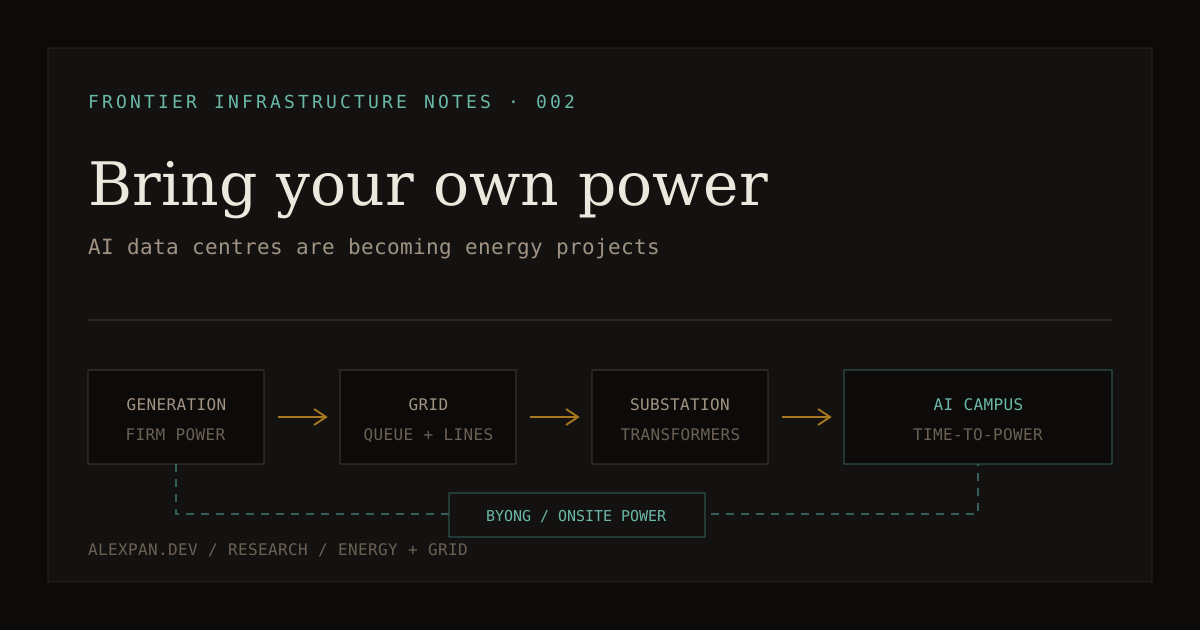
最重要的变化是BYONG,也就是“带着新增电源来”。新增发电与大型负荷不必在同一围墙内,只要电气距离足够近并被一起研究,就可能减少网络升级。AI园区由此不再只是向公用事业申请容量,而是带着燃机、燃料电池、储能或其他新增电源共同申报。
三、价值从算力采购向“通电速度”迁移
当一台GPU的经济寿命短于一条新输电线路的建设周期,提前一年通电本身就具有巨大价值。真正受益的未必是发电量最多的公司,而是能缩短建设路径、提供确定交付周期,并承担系统集成责任的公司。
| 公司 | 所处环节 | 已确认信号 | 下一项证据 |
|---|---|---|---|
| GE Vernova NYSE: GEV | 燃机、电网设备与电气化 | 燃机积压与预留槽位达116GW;2026年至今数据中心电气化订单超过50亿美元 | 预留槽位转为合同、产能兑现与利润率 |
| Eaton NYSE: ETN | 变压器、开关设备与配电 | Electrical Americas滚动订单增长42%,公司称由数据中心动能推动;电气业务积压增长48% | 交付周期、扩产后的订单转化与价格能力 |
| Bloom Energy NYSE: BE | 现场燃料电池发电 | Oracle已签约1.2GW,主协议上限2.8GW;55天部署为公司披露案例 | 真实投运MW、燃料成本、可用率与项目利润 |
| Quanta Services NYSE: PWR | 输电、变电站与电力施工 | 2025年底电力业务积压达362亿美元 | 数据中心相关收入拆分、工期与人力约束 |
以上数字来自公司披露,只证明订单与积压信号,不证明最终市场份额或投资回报。这是一张研究观察名单,不是证券推荐。
四、不能忽略的另一面
- 需求预测可能重复计算:同一项目可能在多个地区申请接入,宣布的GW不能等同于最终投运。
- 灵活负荷可能比新建电源更便宜:如果数据中心愿意限电、迁移任务或使用储能,部分昂贵的网络升级可以避免。
- 现场发电并不天然快速:燃气供应、排放许可、社区反对和设备交期都可能重新形成瓶颈。
- 模型效率改变容量需求:推理优化、芯片效率和更高利用率可能减少每单位AI产出的电力增量。
- 积压不等于收入:槽位预留可能取消,扩产也可能让设备供需在周期后段正常化。
五、接下来真正要跟踪什么
- 六个RTO/ISO如何回应FERC命令,是否正式采用成本回收、灵活服务和BYONG流程。
- 项目披露从“宣布GW”转向“已通电MW”的速度,以及取消率是否上升。
- 燃机、变压器和开关设备交期是否开始缩短,新增产能是否压低议价能力。
- 数据中心是否签署可中断负荷合同,并实际在电网紧张时降低取电。
- 现场发电项目的燃料成本、排放许可、可用率和全生命周期成本。
方向判断的置信度为中高:并网已经从后台工程问题升级为AI部署的核心约束,监管规则和企业订单都在响应。具体赢家的置信度更低,因为项目重复计算、技术路线和扩产周期仍可能改变价值分配。
来源与证据等级
- T1FERC — Large Load Integration Orders, 18 Jun 2026美国联邦监管机构;用于六大区域、电价规则和改革范围。
- T1FERC — Commissioner Rosner on cost recovery, flexible service and BYONG监管者一手解释;用于改革机制与政策意图。
- T1IEA — Energy and AI: AI and energy security独立公共机构;用于20%延迟风险和设备供应链。
- T1IEA — Electricity 2026, Executive Summary用于全球并网队列、投资需求与灵活连接。
- T1NERC — 2025 Long-Term Reliability Assessment北美可靠性评估;用于峰值需求与数据中心驱动。
- T2GE Vernova — Q2 2026 results公司一手披露;订单与产能数据带有公司立场。
- T2Eaton — Q1 2026 results公司一手披露;用于订单、积压和数据中心动能。
- T2Bloom Energy — Oracle partnership, Apr 2026供应商披露;签约容量可验证,55天部署仍属公司案例。
- T2Quanta Services — FY2025 operational and financial summary公司一手披露;用于电力业务积压,不用于推断数据中心份额。
1. Annual electricity is the wrong question
Most AI energy debates begin with terawatt-hours. A project developer faces a narrower constraint: can a specific campus obtain hundreds of megawatts of reliable capacity within 18 months? Is nearby transmission available? When will transformers and switchgear arrive? Can the system remain reliable during extreme weather?
NERC forecasts more than 224GW of additional North American summer peak demand over ten years, 69% above its prior forecast, with AI and digital-economy data centres accounting for most of the increase. The IEA estimates grid constraints could delay around 20% of global data-centre capacity planned through 2030. The world may have enough annual energy while lacking power at the right place and time.
NERC 2025 LTRA
IEA base case
IEA Electricity 2026
Interconnection is not a ticketing system. A large load can require substations, transmission and generation. The IEA notes that new transmission often takes four to eight years in advanced economies, while lead times for transformers and cables have doubled in three years. Site selection is becoming energy engineering.
2. FERC is rewriting large-load access
In June 2026, FERC directed all six US regional grid operators to justify or change their large-load tariffs within 60 days. The action targets how projects enter queues, who pays, how flexible loads can operate, and whether generation and demand can be studied together.
Projects that disappear should still pay
Cost Recovery Agreements are intended to keep households from paying for infrastructure built for a data centre that never arrives. Escalating readiness requirements also target speculative projects that reserve capacity in several regions and distort forecasts.
Flexible load can connect faster
Non-firm transmission lets data centres limit grid withdrawals under constrained conditions. They exchange operating flexibility for faster access and fewer network upgrades. Schedulable workloads, storage and cross-campus task migration may therefore become interconnection assets.
Bring Your Own New Generation
BYONG is the structural change. A new generator and large load do not need to share a fence. If they are electrically proximate and studied together, they may require fewer upgrades. AI campuses are beginning to arrive with turbines, fuel cells, storage or other supply instead of only requesting utility capacity.
3. Value is migrating toward time-to-power
When a GPU's economic life is shorter than a transmission build, energising one year earlier has substantial value. The winners may be less about who generates the most electricity and more about who shortens deployment, offers credible delivery dates and accepts system responsibility.
| Company | Layer | Confirmed signal | Next evidence |
|---|---|---|---|
| GE Vernova NYSE: GEV | Turbines, grid equipment and electrification | 116GW gas equipment backlog plus slot reservations; over $5B of data-centre electrification orders YTD | Reservations converting, capacity delivery and margins |
| Eaton NYSE: ETN | Transformers, switchgear and distribution | Electrical Americas rolling orders +42%, attributed to data-centre momentum; electrical backlog +48% | Lead times, conversion and pricing after expansion |
| Bloom Energy NYSE: BE | Onsite fuel-cell generation | 1.2GW contracted with Oracle under a 2.8GW framework; 55-day deployment is a company-reported case | Energised MW, fuel cost, availability and project margins |
| Quanta Services NYSE: PWR | Transmission, substations and construction | $36.2B electric segment backlog at year-end 2025 | Data-centre revenue, project duration and labour constraints |
Company disclosures show order and backlog signals, not future market share or returns. This is a research watchlist, not a security recommendation.
4. The counter-case matters
- Forecasts may double count demand: one project can apply in several regions; announced gigawatts are not energised capacity.
- Flexibility may beat new generation: curtailment, workload migration and storage can avoid part of the buildout.
- Onsite power is not automatically fast: gas supply, emissions permits, community opposition and equipment lead times can become new bottlenecks.
- Efficiency changes capacity needs: inference optimisation, better chips and higher utilisation can reduce incremental power per unit of AI output.
- Backlog is not revenue: slot reservations can be cancelled and manufacturing expansion can normalise supply.
5. Milestones that matter next
- How six RTOs and ISOs answer FERC, and whether cost recovery, flexible service and BYONG become tariff rules.
- Whether disclosures move from announced GW to energised MW, and whether cancellation rates rise.
- Whether turbine, transformer and switchgear lead times decline as new capacity enters service.
- Whether data centres sign interruptible-load contracts and actually reduce withdrawals during stressed periods.
- The fuel cost, permits, availability and lifetime economics of onsite generation.
Confidence in the direction is medium-high: interconnection has moved from a back-office engineering issue to a core AI deployment constraint, and both regulation and orders are responding. Confidence in specific winners is lower because double counting, technology choices and capacity cycles can still change value allocation.
Sources and evidence tiers
- T1FERC — Large Load Integration Orders, 18 Jun 2026Federal regulator; scope, regions and tariff reform.
- T1FERC — Cost recovery, flexible service and BYONGFirst-party regulatory explanation and intent.
- T1IEA — Energy and AI: AI and energy securityIndependent public institution; delay risk and equipment supply chain.
- T1IEA — Electricity 2026, Executive SummaryQueues, grid investment and flexible connection.
- T1NERC — 2025 Long-Term Reliability AssessmentNorth American peak-demand and data-centre forecasts.
- T2GE Vernova — Q2 2026 resultsCompany-reported orders and capacity.
- T2Eaton — Q1 2026 resultsCompany-reported orders, backlog and demand driver.
- T2Bloom Energy — Oracle partnership, Apr 2026Contracted capacity is evidence; deployment speed remains a vendor case.
- T2Quanta Services — FY2025 operational and financial summaryCompany-reported electric backlog; no inference about data-centre share.